Hiking through Yellowstone’s wilderness offers incredible opportunities to see wildlife and explore the park’s natural beauty, but it also means entering bear country. Practicing proper bear safety hiking habits can help you reduce the risk of an encounter and feel more prepared on the trail. From making noise and carrying bear spray to recognizing bear activity and knowing how to respond, understanding these precautions is essential for anyone exploring Yellowstone on foot.
Whether you're an experienced backpacker or visiting Yellowstone for the first time, preparation is one of the most important parts of hiking in bear country. Knowing how to make your presence known, carry bear spray, and recognize animal behavior can help reduce risks while protecting Yellowstone's wildlife.
Reduce the Chances of Unexpected Bear Encounters
One of the best ways to stay safe around bears is to avoid surprising them. Bears may react defensively when startled, particularly when they're protecting cubs, feeding, or moving through dense vegetation.
Make noise as you hike, especially around blind corners, near streams, through thick brush, and in areas where visibility is limited. Talking, calling out periodically, or using your voice to announce your presence can help bears recognize that people are nearby. Avoid relying on headphones or other distractions that prevent you from hearing activity around the trail.
Staying on established trails also makes it easier to maintain awareness of your surroundings. Avoid shortcuts through dense vegetation, and pay attention to posted trail closures and wildlife warnings.
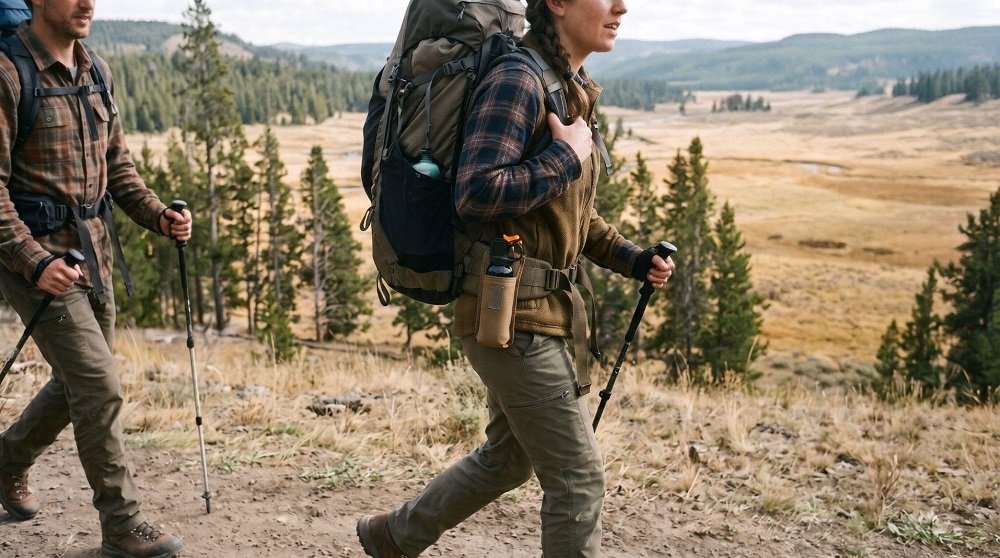
Whenever possible, hike in groups. Groups are generally more noticeable to wildlife than individual hikers, and traveling together makes it easier to respond if an unexpected encounter occurs. Keep children close and avoid allowing anyone in your group to wander ahead or fall far behind.
Carry and Use Bear Spray Correctly
Bear spray is an important safety tool when hiking in Yellowstone. It is specifically designed to deter aggressive bears and should be carried by every member of your hiking group.
Choose an EPA-approved bear spray product and check its expiration date before heading onto the trail. Keep the canister in an accessible waist or chest holster rather than inside your backpack. If you're hiking through thick vegetation or an area with limited visibility, keep it in your hand so you can reach it immediately.
Before your hike, familiarize yourself with the safety clip, spray direction, and manufacturer's instructions. Practice accessing the canister using an inert training canister if available. During an encounter, be aware of wind direction and follow the product instructions. Yellowstone National Park advises deploying bear spray when a charging bear is approximately 60 feet away or closer, creating a cloud between you and the animal. Continue spraying if necessary until the bear changes direction.
Remember that bear spray is a last line of defense, not a substitute for keeping your distance or practicing safe hiking habits. Never apply it to your clothing, skin, or backpack as a preventive measure.
Store Food and Dispose of Waste Properly
Food and scented products can attract bears even when they're not immediately visible. Proper storage and waste disposal help prevent bears from associating human activity with food, reducing the likelihood of dangerous encounters.
Keep snacks, meals, garbage, and scented toiletries secured in approved storage containers or bear-resistant food lockers where required. Never leave food unattended on the trail, at picnic areas, or around campsites. If you're backpacking overnight, follow Yellowstone's backcountry food-storage requirements, including using designated food poles or approved bear-resistant containers.
Pack out food scraps, wrappers, and other waste rather than leaving them behind. Clean cooking equipment and utensils after meals, and dispose of dishwater according to park regulations. Avoid feeding wildlife or leaving scented items accessible, including toothpaste, sunscreen, and personal care products.
These habits protect hikers while preventing bears from becoming accustomed to human food sources.
What to Do If You Encounter a Bear
Even with careful preparation, unexpected bear encounters can happen. If you see a bear on the trail, stay calm, keep your group together, and avoid sudden movements. Never approach the animal for a photograph or attempt to get closer for a better view. Yellowstone requires visitors to remain at least 100 yards away from bears.
If a bear notices you, speak calmly and slowly back away. Do not run, scream, or make movements that could provoke the animal. Keep your bear spray accessible and prepare to use it if the bear charges.
Understanding the difference between black bears and grizzly bears is useful, but behavior matters more than appearance when deciding how to respond.
Black bears: If a black bear approaches persistently or attacks, do not play dead. Fight back using anything available, concentrating on the bear's face and muzzle. If the bear is simply passing through, give it room to leave rather than approaching or attempting to scare it unnecessarily.
Grizzly bears: A defensive grizzly encounter may occur when a bear is surprised, protecting cubs, or defending a food source. If a defensive attack results in physical contact, Yellowstone National Park advises dropping to your stomach, protecting the back of your neck with your hands, keeping your backpack on, and playing dead. Remain still until the bear leaves. However, if a bear displays predatory behavior or continues an attack, fight back rather than playing dead.
Do not rely on identifying the species alone to determine your response. The circumstances and behavior of the bear are important. Familiarize yourself with Yellowstone's official bear encounter guidance before hiking.
Prepare for a Safer Yellowstone Hiking Experience
Hiking in bear country doesn't mean avoiding Yellowstone's wilderness. It means understanding the environment, respecting wildlife, and making responsible decisions throughout your adventure. Staying alert, hiking in groups, carrying accessible bear spray, and following proper food-storage practices all contribute to a safer experience.
For visitors who want additional guidance, joining guided Yellowstone National Park tours can provide valuable insight into trail conditions, wildlife behavior, and park safety. The experienced team at Yellowstone Hiking Guides helps visitors explore Yellowstone's remarkable landscapes while learning more about its wildlife and natural environment.
With the right preparation and respect for wildlife, you can enjoy Yellowstone's trails while helping protect the animals that make the park so extraordinary.